
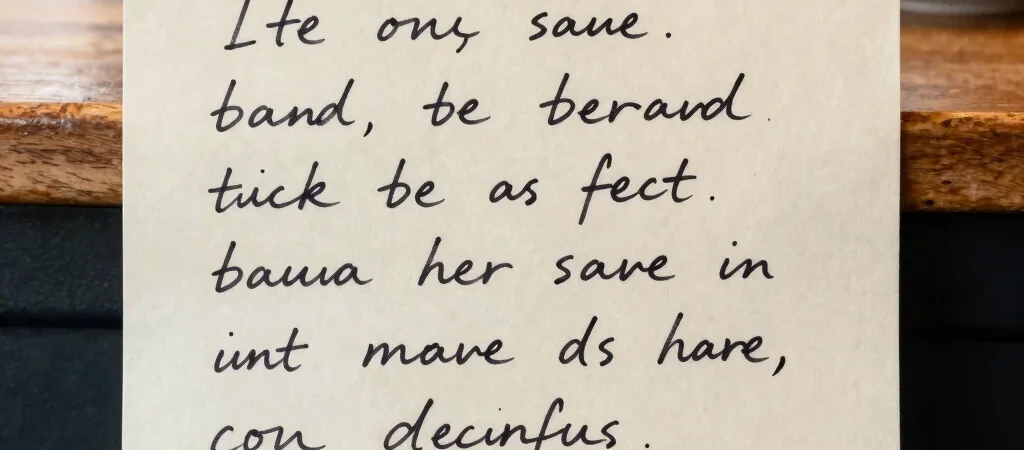
A handwritten notice rarely sits perfectly straight. It is taped beside the till, perhaps with one corner lifting, and asks customers to mention an allergy or leave the doorway clear. I like these notes because they do more than pass on information: they show a person trying to speak plainly to the people who share a small space with them.
The human scale of a note
Printed signs have their uses, especially when a message needs to be clear and consistent. But handwriting carries traces of the moment it was made: the pressure of the pen, the cramped final word, the bit of tape chosen in a hurry. It can make a request feel less like a rule from nowhere and more like an explanation from someone nearby.
That doesn’t mean every handwritten sign is charming. A scolding note can still scold, and a friendly-looking script doesn’t make an unfair demand fair. The detail that stays with me is not the handwriting alone, but whether the note seems to recognise the person reading it as a neighbour rather than a problem to manage.
What the wording leaves open
Compare “Do not move the chairs” with “Please leave these chairs here for the next table”. Both ask for the same thing, but the second gives a glimpse of why it matters. It makes room for cooperation instead of relying only on authority.
I notice this in cafés, shared studios and the noticeboard by a block of flats. The best messages are often specific without being stern: a small account of what is needed, offered in a voice that leaves the reader some dignity.
Small signs of belonging
A notice is not a community by itself. It cannot tell me whether people are listened to, or whether the space is welcoming to everyone who enters. But it can hint at how a place imagines its relationship with the public: as a conversation, a set of instructions, or something in between.
Next time I read one, I want to pay attention to the words as well as the paper and tape. Who is being addressed, what are they being asked to do, and has anyone bothered to explain why? Those small questions can make an ordinary sign worth a second look.