
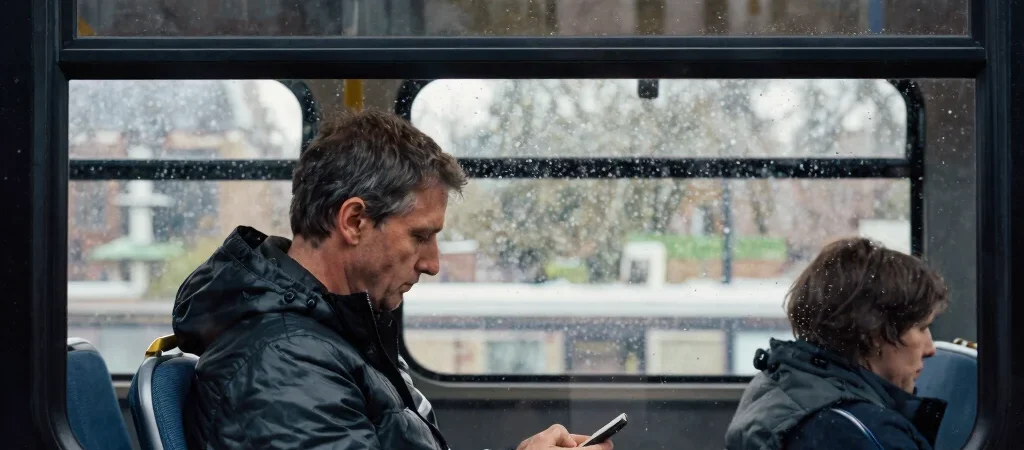
On a bus, there is a particular moment when someone looks up from their phone just as another passenger is deciding whether to offer a seat. Nothing dramatic happens; a glance, a half-smile, perhaps a quiet “cheers”. Still, I find myself noticing these small exchanges because they make public space feel briefly shared rather than merely occupied.
The room around the screen
Phones have become part of the furniture of waiting: in the queue at the chemist, at a stop in the rain, between one train announcement and the next. I use mine too, and I don’t think looking down is a moral failure. Sometimes a screen is a way to get through an awkward pause or protect a little privacy in a crowded place.
What interests me is the moment we come back up for air. A person checking whether someone needs the window seat, or making room for a buggy, is not performing some grand defence of conversation. They are simply taking in the scene they are already part of.
Attention without obligation
There is a risk in praising attentiveness too neatly: it can sound as though everyone owes strangers conversation. I don’t believe that. A quiet journey can be a kindness, and headphones can draw a boundary that someone needs.
For me, looking up is less about being available than being aware. It might mean noticing that the person beside me is struggling with a folded pushchair, then offering help without insisting. The courtesy lies in seeing the possibility, not in demanding a particular response.
A little room to notice
I keep coming back to how much of public life happens in these nearly invisible choices. We make a little room, move a bag from the seat, let someone pass before us through the door. None of it proves that a city is kind, but it gives kindness somewhere ordinary to happen.
Next time I’m waiting for a bus, I might still check my messages. I’d also like to leave a few moments unfilled, long enough to notice who else is waiting and what the weather is doing to the pavement.